Short answer up front, since I know that's what most people actually want. If your eyesight is fine and you just want relief from the burn and dryness that comes from staring at a monitor for eight hours, the livho blue light glasses do that job for around $13 and you don't need anyone's permission to buy them. If you actually need vision correction, meaning you squint at small text or get headaches from focusing on a screen at a specific distance, no pair of $13 glasses is going to fix that, and you need the prescription route. This isn't really a fair fight on paper, one costs 13 dollars and the other can run into the hundreds, but I've worn both kinds at my desk and the answer to "which one should I buy" depends entirely on which problem you actually have.
I've been wearing the livho glasses at my desk since spring, and I also went through the full prescription computer glasses process a couple years back when my optometrist flagged early presbyopia, the normal age related loss of close up focus that hits most people by their mid 40s. So I've lived on both sides of this comparison, not just read the marketing copy for one and guessed at the other. That matters here more than in most gear comparisons, because this isn't really two products competing for the same job, it's two products that only overlap for a slice of people, and figuring out which slice you're in is most of the decision.
| livho Blue Light Glasses | Prescription Computer Glasses | |
|---|---|---|
| Product Type | livho Blue Light Blocking Glasses (Non-Prescription) | Custom Prescription Computer Glasses |
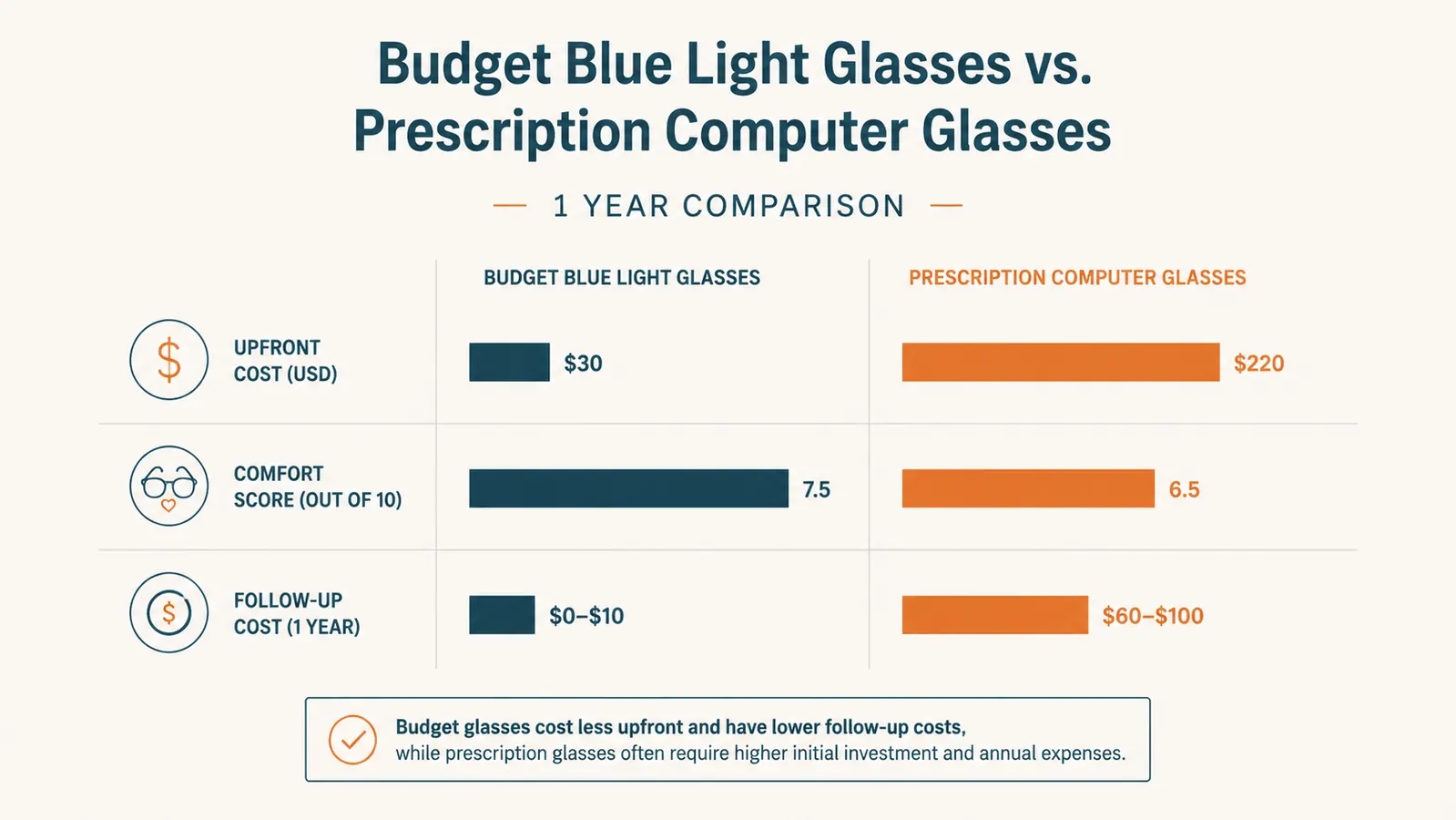
| Upfront Cost | Around $13 for the pair | $150 to $400+ depending on lenses and frame, before insurance |
| Requires Eye Exam | No, ready to wear out of the box | Yes, current prescription required |
| Corrects Vision | No, clear lens with a coating only | Yes, ground to your actual near-vision correction |
| Blue Light Filtering | Yes, coating reduces blue light and glare | Optional add-on, not always included |
| Best For | Normal vision, eye strain and dryness relief | Presbyopia, farsightedness, or any diagnosed focus issue at screen distance |
| Replacement If Broken | Cheap enough to keep a spare on hand | Full re-order at full lens cost each time |
| Follow-Up Cost | None, one time purchase | New exam and new lenses roughly every 1 to 2 years as prescription changes |
| Time to Get Wearing Them | Same day, order and wear immediately | 1 to 3 weeks for exam plus lens grinding and shipping |
A note on how I'm judging this, because the comparison only works if the test conditions are honest. I wore the livho glasses on my normal remote work days, six to eight hours of screen time, mixed between two monitors and a laptop, for about three months straight. Separately, I wore actual prescription computer glasses daily for roughly a year before switching back to regular progressive lenses. Both experiences are recent enough and long enough that I trust what my own eyes told me, not just what either box claimed. I also asked around my own home office crowd, three people I know who've gone through eye exams specifically for computer work, to check my experience against theirs before writing any of this down.
Where the livho Glasses Win
The obvious one is price. Thirteen dollars for a pair of glasses is close to disposable, which changes how you use them. I keep a spare pair in my laptop bag and another in the truck, because at that price losing or sitting on a pair isn't a real financial event. Try doing that with a $250 pair of prescription lenses and you'll be a lot more careful, which honestly adds a small amount of low grade stress to owning them. Cheap means replaceable, and replaceable means you actually use the thing instead of babying it.
The second win is speed. I ordered the livho glasses and had them on my face within two days. No appointment, no waiting on an optometrist's schedule, no lens grinding turnaround. If you've got a new job starting Monday and you know you're about to sit in front of a screen for the first time in years, or you're just noticing your eyes feel gritty by 3pm most days, you can solve that same week. The prescription route, even when it goes smoothly, took me almost three weeks from booking the exam to picking up the finished glasses last time I went through it.
The third thing, and this one surprised me, is that the coating on the livho lenses genuinely does cut glare off my monitor in a way I notice, especially on video calls where there's a window behind my desk. I'm not going to claim it eliminated eye strain completely, nothing does that when you're staring at a screen for eight hours, but there's a real, noticeable softening of that white glow that used to leave my eyes feeling raw by late afternoon. For someone with normal vision whose only complaint is screen fatigue, that's the actual problem being solved, and $13 solves it.
There's also a low key benefit that took me a few weeks to appreciate, which is that having a genuinely cheap pair sitting on my desk changed how consistently I actually wore glasses at all. When I had the prescription pair, I'd sometimes skip putting them on for a quick five minute email check, telling myself it wasn't worth the hassle, then that five minutes turned into an hour of unprotected screen time before I remembered. With a $13 pair just sitting next to the keyboard, there's no mental friction to grabbing them, so I actually wear something during the stray moments that add up over a workday.
If your eyes are fine but the screen glare is wrecking your afternoons
The livho glasses won't fix a vision problem, but if that's not what you have, they take the edge off screen glare for less than the cost of lunch. Check today's price and keep a spare pair in your bag.
Amazon Check Today's Price on Amazon →
Where Prescription Computer Glasses Win
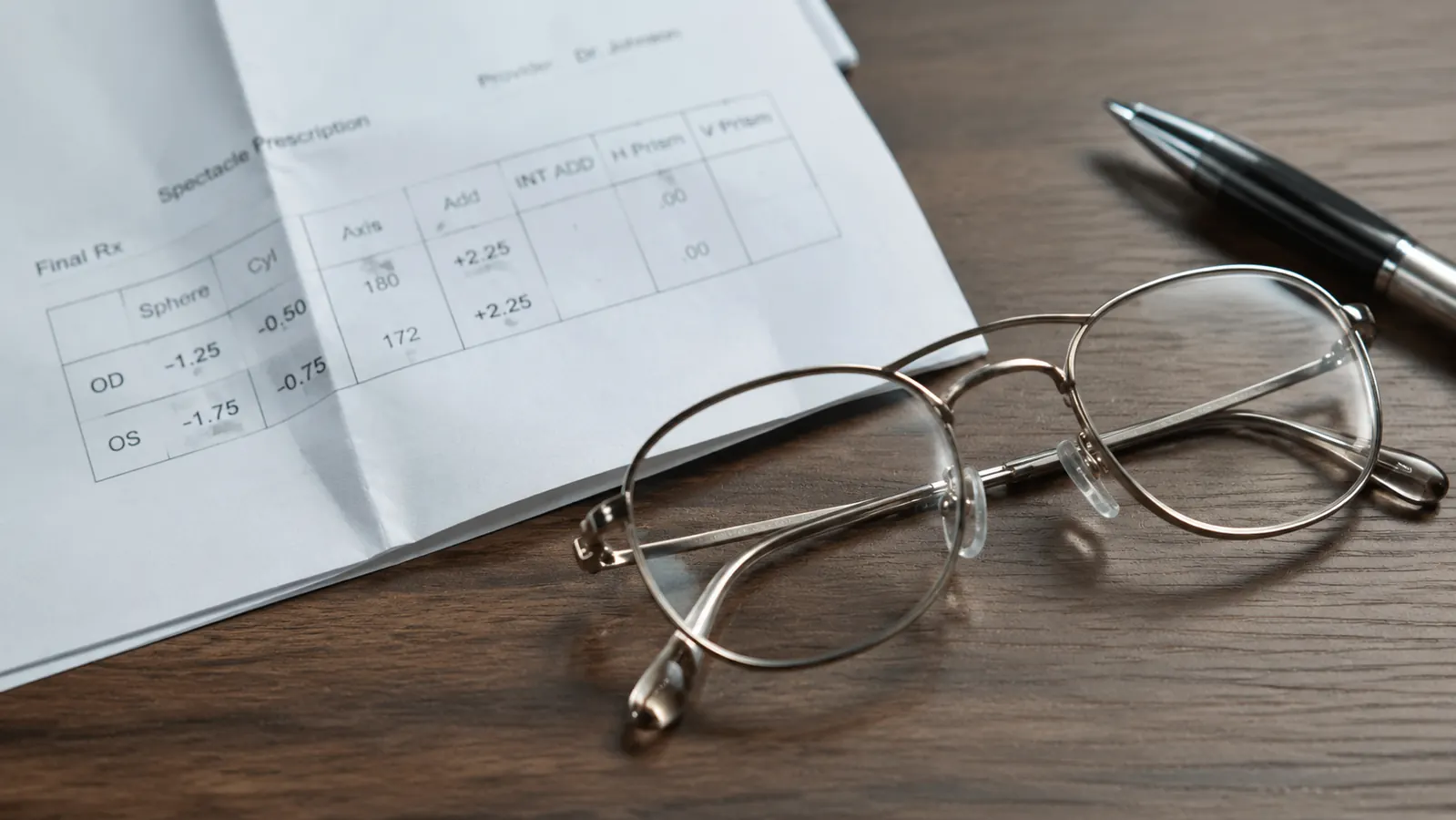
This is the part that matters most and it's where a lot of comparison articles get lazy. If your actual problem is that you can't focus clearly at arm's length anymore, which is what presbyopia does starting around your mid 40s for most people, no amount of blue light coating is going to fix that. A blue light lens with no correction is optically flat glass with a tint. It filters light. It does not bend light to bring a blurry screen into focus. That's a completely different job, and it requires an actual prescription ground into the lens by someone who measured your eyes.
When I got my prescription computer glasses, the difference wasn't subtle, it was immediate. Text on my monitor that I'd been unconsciously leaning forward to read snapped into focus the moment I put them on. I hadn't even realized how much I was straining until it stopped. That's not something the livho glasses, or any non-prescription pair, can replicate, because the problem was never about light filtering in my case, it was about my eyes losing their ability to focus at that specific distance.
A blue light coating filters glare. A prescription lens corrects focus. Those are two different jobs, and only one of them requires an eye doctor.
Prescription computer glasses also tend to come with better overall build quality since you're paying for it, sturdier hinges, real adjustable nose pads, frames that hold their shape after being tossed in a bag for months. The livho glasses are fine for what they are, but I wouldn't expect them to survive being sat on the way a $200 pair with metal hinges will. If you're hard on glasses, that's worth factoring in separately from the vision question.
One more point in favor of the prescription route that doesn't get mentioned enough, an optometrist actually measures the working distance to your specific monitor setup, not a generic "reading distance" like drugstore readers assume. Computer glasses are typically ground for the 20 to 26 inch range most people sit from their monitor, which is closer than reading distance but farther than a phone. That precision is part of what you're paying for, and it's the reason a properly fitted pair feels noticeably different from grabbing a pair of dollar store reading glasses off a rack.
The Overlap Nobody Talks About
Here's something that took me a while to sort out myself. You can absolutely need both. I know people who wear their prescription glasses for actual vision correction and put a blue light clip on top of them, or ask their optician to add a blue light coating to the prescription lens as an option. If your optometrist offers that add on, it's usually a modest extra cost added to lenses you already need, and it gets you both benefits in one pair. That's a reasonable middle path if you're already getting prescription lenses anyway and want the glare reduction too.
What doesn't make sense is buying $13 livho glasses hoping they'll replace a prescription you actually need. I've talked to a few people who kept pushing through blurry screen text with drugstore readers or blue light glasses, assuming eye strain was just a normal part of remote work, when what they actually needed was a real exam. If home remedies and cheap glasses haven't touched the problem after a few weeks, that's a signal to book an actual eye exam rather than buy a third pair of blue light glasses hoping the next one works better.
Who Should Buy Which
If your vision tests fine and your complaint is purely fatigue, dryness, or that end of day glow behind your eyes after screen time, start with the livho glasses. They're cheap enough that trying them costs you almost nothing, and for a lot of people with otherwise normal vision, cutting glare is genuinely most of the battle. If you're over 40 and noticing you hold your phone farther away than you used to, or you catch yourself leaning toward the monitor to read something that used to be easy, skip the drugstore aisle and book an eye exam instead. That's a focus problem, not a lighting problem, and only a prescription lens fixes it.
For most people reading a comparison like this, the honest starting point is the cheap pair. Thirteen dollars is a low bar to clear, and if it solves your actual problem, you've saved yourself an exam, an appointment, and a few hundred dollars. If it doesn't, you've lost almost nothing, and now you know your issue is worth a real conversation with an eye doctor instead of another guess off Amazon. Either way you've spent less than the cost of a pizza to find out, which is a pretty low price for actually knowing what's going on with your own eyes instead of guessing.
Try the cheap fix before you book the expensive one
If your eyes are just tired, not blurry, the livho glasses are the fastest, lowest cost way to find out if that's your whole problem. Check today's price and see for yourself this week.
Amazon Check Today's Price on Amazon →