

The livho listing on Amazon reads like every other blue light glasses listing. Blocks harmful blue light. Reduces eye strain. Blocks UV. Ninety nine percent of what you'll find written about these glasses either repeats those four claims word for word or just says they're comfortable and cheap. Nobody digs into what actually happens to a thirteen dollar pair of glasses after real months on your face, because most reviewers wear them for a week, snap a photo, and move on to the next product. I don't work that way. I fix things around a house for a living now that I can't be up a ladder anymore, and I spend the rest of my week at a desk running the business side of it, so these glasses have been on my face for real work, not a review cycle.
This isn't the long term diary of my headaches, I've written that piece separately if that's what you're after. This is the stuff that doesn't make it into the marketing copy or the star rating: what the nose pads do to your skin after a while, why the tint looks different depending on what's behind you, what the UV protection claim actually means in practice, and where the build quality quietly cuts a corner you won't notice until month four or five.
The Quick Verdict
A genuinely decent pair of glasses for the money, but the listing oversells the science and undersells a few small wear issues that show up with real use.
Amazon Check Today's Price →Before you buy based on the star rating alone, read what the listing leaves out
Thirteen dollars is a low bar. Check today's price and decide for yourself once you know what to actually expect.
Amazon Check Today's Price on Amazon →How I've Used Them
I bought my pair in the spring after my daughter started complaining about her eyes hurting during online classes, and I figured I'd test a pair myself before handing them to a teenager and hoping for the best. I wear mine most weekdays, somewhere around five to seven hours depending on how much of the day is invoicing and scheduling versus actual tool time. My desk sits in what used to be a spare bedroom, north facing window, so I get a lot of shifting daylight through the day rather than a consistent lamp glow, which turned out to matter more than I expected once I started paying attention to the tint.
I also let my daughter use a second pair for about two months so I'd have more than my own eyes to go on, and I checked in with her regularly instead of just asking once and calling it data. Between the two of us, that's roughly nine months of combined real wear time, across two different faces, two different screen setups, and two very different reasons for wanting the glasses in the first place.
The UV Protection Claim Nobody Explains
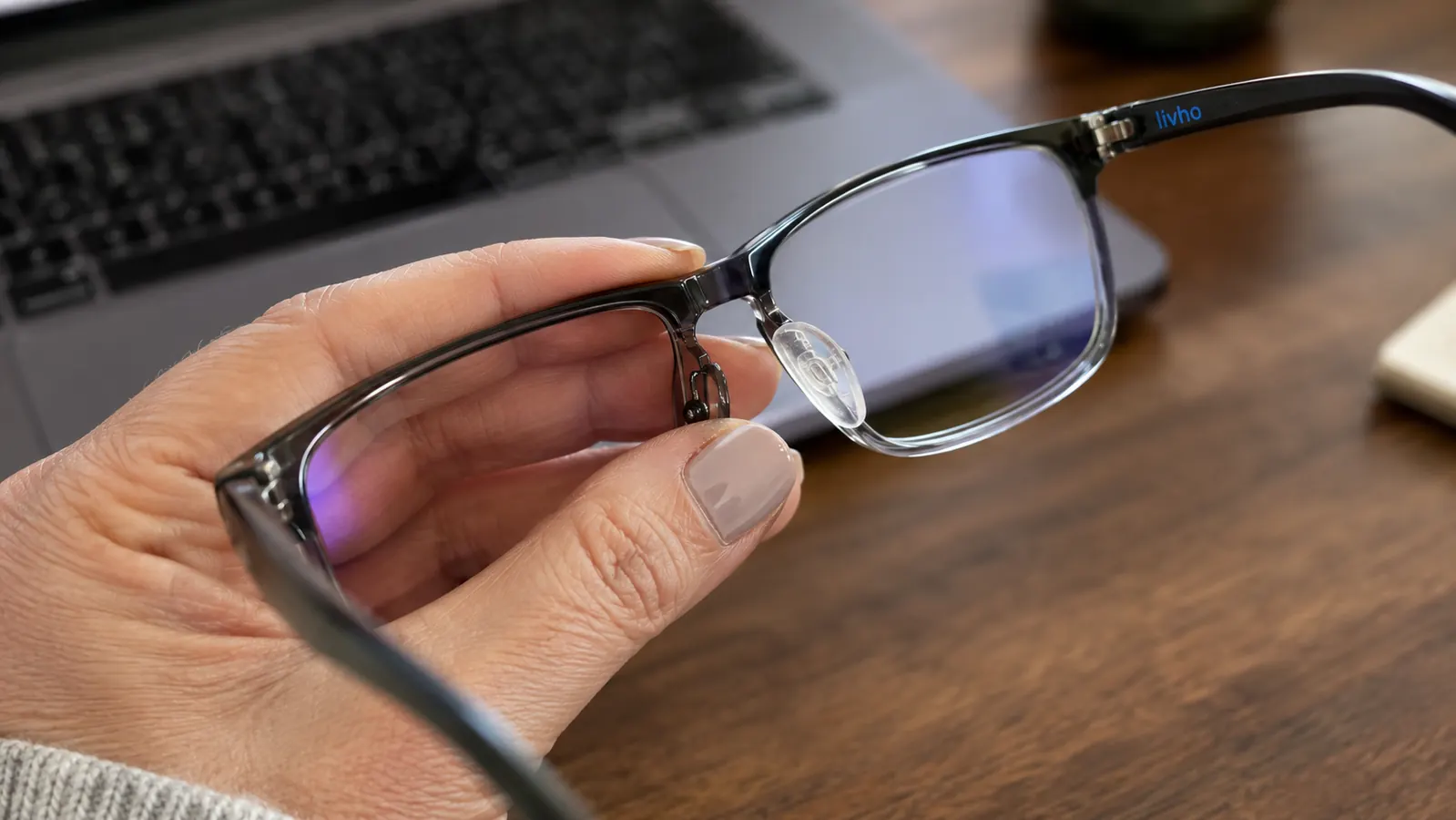
The listing says these block UV, and that's technically true, but almost nobody explains what that actually means for a pair of computer glasses. Your monitor does not emit meaningful UV radiation. None of your screens do. The UV protection on a pair of computer glasses like these is really about incidental sunlight if you happen to be near a window, which is a nice bonus, not the reason you're buying them. If you saw UV protection on the box and pictured it doing something for your screen exposure specifically, it isn't. It's a leftover spec from general eyewear testing standards, tacked onto the listing because it sounds like an added benefit, and in a narrow sense it is one, just not the one most buyers assume when they read it quickly.
I only caught this because I used to do outdoor electrical work and actually know what UV exposure standards look like on a spec sheet. Most shoppers skim past it assuming it means something about screen safety. It doesn't hurt anything having it, I just don't think it deserves the prominent bullet point placement it gets on the product page, and I'd rather you know that going in than assume you're getting screen-specific protection you're not.
The Tint Looks Different Depending on the Room
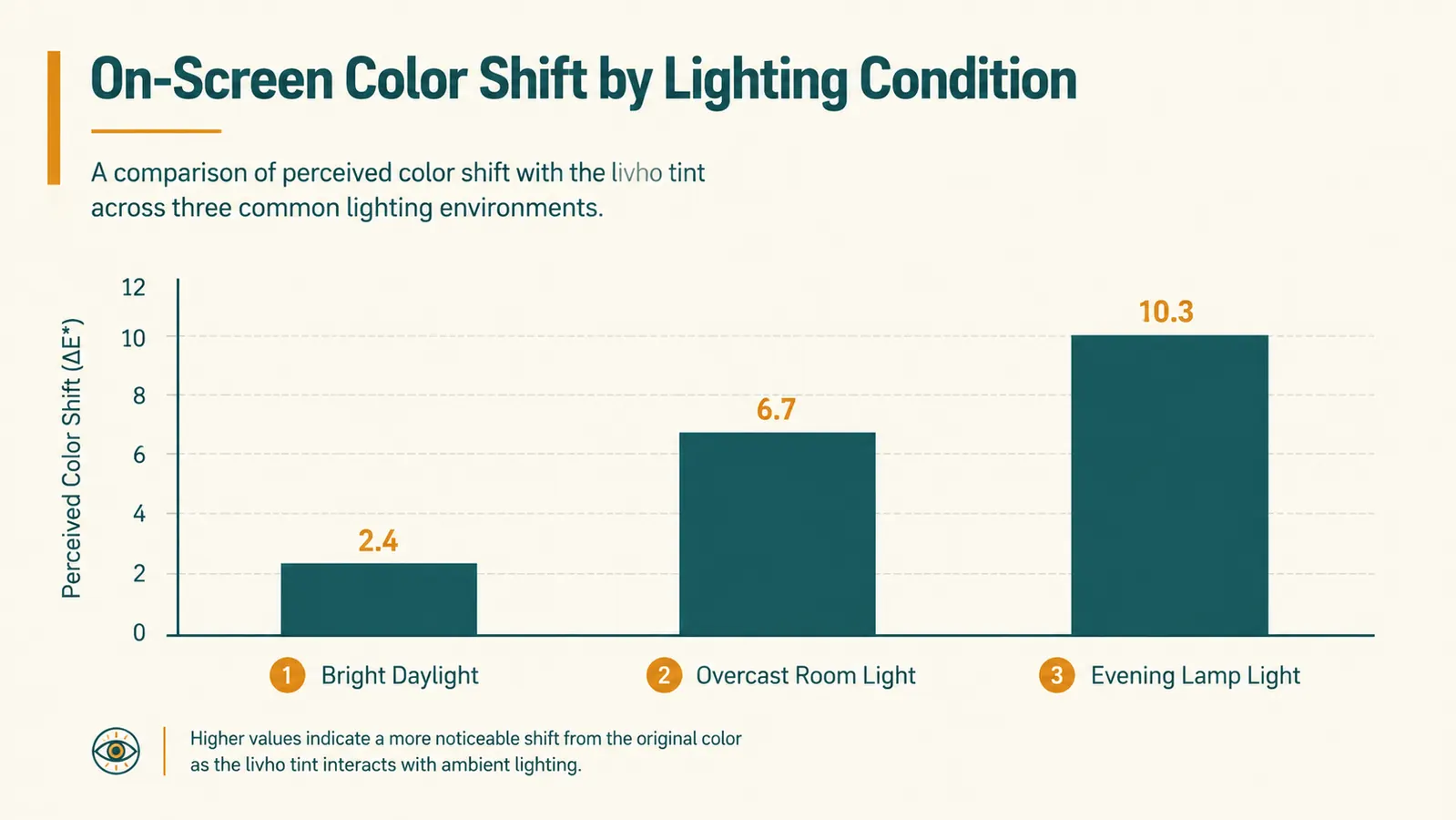
Here's something that took me a couple of months to notice clearly enough to write about. The amber tint on these lenses reads noticeably stronger under warm lamp light in the evening than it does under my north facing window during the day. In bright, cool daylight, the tint is subtle enough that I sometimes forget I have them on. Under a warm desk lamp after sunset, the same lenses make white backgrounds on my screen look distinctly more yellow, enough that I've caught myself double checking whether a document was actually off-white paper colored instead of pure white.
This isn't a defect, it's just how a fixed amber tint interacts with different ambient light, but it's not something the listing mentions anywhere, and it changes the experience depending on when you're wearing them. If most of your screen time happens after dark under warm lighting like mine does in winter, expect the color shift to be more noticeable than the product photos suggest. If you're mostly working during the day near a window, you'll barely register it.
The Nose Pads Wear Smooth, and That Changes the Fit
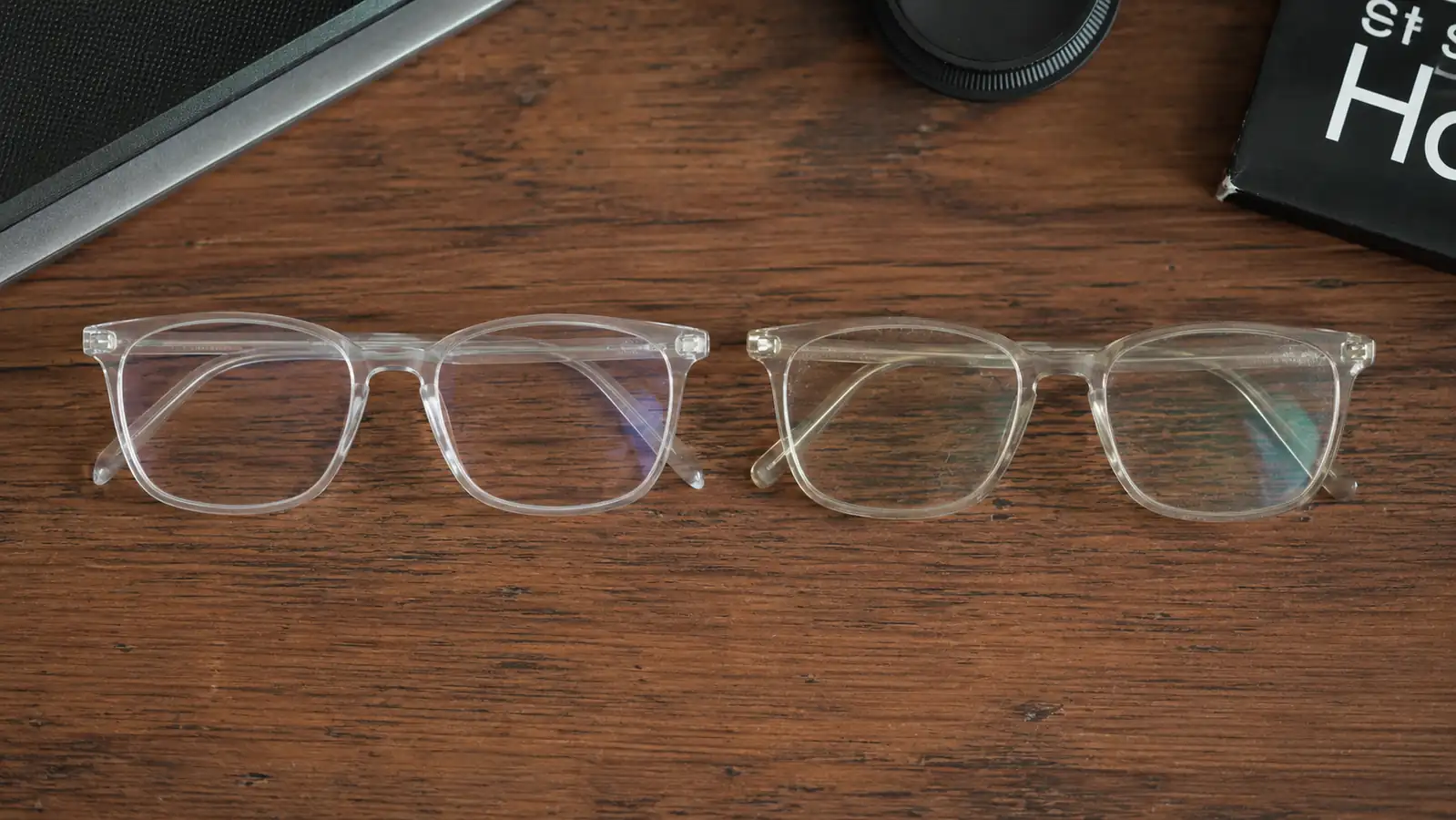
This is the one that genuinely surprised me. The nose pads on these are a soft rubberized material, and they feel great for the first couple of months, grippy enough that the glasses don't slide down my nose even when I'm sweating a little from crawling around under a client's sink. Around month four, I noticed mine had started to feel slightly slick, not sticky and secure the way they'd been at first. A side by side comparison against my daughter's newer pair confirmed it, the older pads had visibly smoothed out, almost polished looking compared to the texture on the newer set.
It's a small thing and it doesn't make the glasses unusable, but it does mean the glasses that fit snugly on day one will very likely sit slightly looser by month five or six, especially if you're someone who wipes your face or pushes glasses up your nose a lot during the day the way I do without thinking about it. Nobody mentions this because most reviews get posted in the first few weeks, before the wear pattern shows up at all.
Most reviews get written in the first two weeks, before the parts that actually wear down have had time to wear down.
The Hinge Tension Is Inconsistent Pair to Pair
My pair and my daughter's pair, ordered about six weeks apart, have noticeably different hinge tension. Mine open and close with a firm, confident snap. Hers are looser, to the point where the arms will occasionally droop open partway on their own if the glasses are lying flat rather than folded. Neither pair has failed outright, but it tells me the quality control on hinge tension isn't tightly dialed in, and you might get a firmer pair or a looser pair somewhat at random. If yours arrive on the loose side, it's not necessarily a defective unit, it may just be normal variance for a budget frame, but it's worth knowing rather than assuming something's wrong with your specific pair.
What the Blue Light Claim Actually Means, in Plain Terms
I want to be straight with you the way I'd be straight with a customer who asked me a technical question I actually knew the answer to. The eye care research on whether blue light from a screen is meaningfully different from blue light from any other light source in your house is not settled. Several eye doctors have gone on record saying screen-related eye strain is mostly caused by reduced blinking and staring at a fixed focal distance for hours, not the specific wavelength of light involved. That doesn't mean these glasses do nothing. It means the mechanism might not be what the marketing implies.
What I can say from actually wearing them is that the tint cuts glare noticeably, especially against a bright white document or spreadsheet background, and less glare does seem to correlate with less eye fatigue by late afternoon for both me and my daughter. Whether that's because of blue light specifically getting filtered, or just because a slightly tinted, slightly glare-reduced screen is generally easier to stare at for hours, I honestly can't separate those two explanations with confidence, and neither can most of the people writing five-star reviews without mentioning that uncertainty at all.
Where the Build Quality Actually Holds Up
It's not all fine print and caveats. The lenses themselves have held up better than I expected on both pairs. No scratches after months of being tossed on a desk covered in sawdust some days and paperwork on others. The frame material has enough flex that I've sat on mine once, fully, my full weight, and they came out fine, which is more than I can say for a pair of cheap sunglasses I destroyed the same way a few summers back. For thirteen dollars, the actual optical part of the product, the part that matters most, is solid.
The included pouch is soft, not a hard case, and it's genuinely too thin to protect the glasses if they end up loose in a bag with tools or a laptop charger. I keep mine in a drawer rather than carrying them around, which sidesteps the issue but also means I don't have a travel-ready case if I wanted one. If you need something you can toss in a work bag daily, budget for a cheap hard case separately.
What livho Gets Right That the Five Dollar Knockoffs Don't
Before I settled on livho, I grabbed a no name three pack off a marketplace app just to see how far the budget could stretch, mostly out of curiosity since I'm the type who likes to know what a few dollars actually buys you. The difference showed up fast. The knockoffs had a tint dark enough that white spreadsheet cells looked gray even in daylight, and the arms were stiff enough that after two hours my temples had visible pressure marks. livho's frame flex and lighter tint aren't flashy features, but they're the difference between glasses you forget you're wearing and glasses you're aware of the whole time. That's worth something even if it doesn't show up as a bullet point anywhere.
The other place livho holds up better than expected is the screw hardware. Cheap glasses usually cut corners on the tiny screws holding the hinge together, and those strip out or back out within weeks. I checked mine under a jeweler's loupe I keep around for small electrical work, and the screw heads on both of our pairs are still clean after months of regular folding and unfolding. It's a small detail, but it's the kind of thing that tells you where a manufacturer actually spent the extra few cents per unit instead of just claiming quality on the listing.
What I'd Tell a Friend Asking Before They Buy
If a buddy asked me straight up whether to get these, I'd tell him yes, but I'd also tell him the three things above that the listing won't. Expect the nose pads to smooth out over time and the fit to loosen slightly by month four or five. Expect the tint to look stronger under warm evening light than it does in daylight product photos. And don't put too much stock in the UV protection bullet point, it's real but it's not doing anything for your screen time specifically.
I'd also tell him not to expect a medical-grade fix for chronic eye problems. If his eyes are genuinely bothering him beyond normal end-of-day tiredness, thirteen dollars of amber-tinted plastic isn't a substitute for an actual eye exam. But if he's just tired of the glare off a bright spreadsheet by 3pm, this is a cheap, low-risk thing to try before spending real money on anything fancier.
What I Liked
- Lenses resist scratching even with rough daily handling
- Frame has enough flex to survive being sat on, tested by accident
- Genuinely cuts glare off bright white screen backgrounds
- Cheap enough to buy a spare without thinking twice
- Lightweight, comfortable for most of a workday
Where It Falls Short
- Nose pads visibly smooth out and loosen the fit after roughly four months
- Hinge tension varies noticeably from pair to pair
- Amber tint reads much stronger under warm evening lamp light than in daylight
- UV protection bullet point is real but misleading about what it covers
- Soft pouch only, no real protection if tossed loose in a bag
Who This Is For
This is a smart, low-risk buy for anyone doing several hours of screen work a day who wants to test whether a tinted lens takes the edge off glare and end-of-day fatigue, without committing real money before knowing if it even helps. It's also a reasonable starter pair for a teenager or a family member doing online classes or homework, the way I used mine as a trial run before handing a pair to my daughter.
Who Should Skip It
Skip these if color accuracy on your screen matters for your work, the tint shift under warm lighting will bother you more than you expect. Skip them too if you're hoping the UV protection claim means something for your screen exposure specifically, it doesn't, that's a separate and mostly irrelevant spec for this use case. And if your eye discomfort is severe or ongoing, see an actual eye doctor before assuming a cheap tinted lens will solve it.
Now you know what the listing leaves out. Decide for yourself.
Check today's price on livho glasses and see if the tradeoffs above are ones you can live with for the money.
Amazon Check Today's Price on Amazon →